
Blog Posts About Liquid Sampling Written by Our Subject Matter Experts (SMEs)
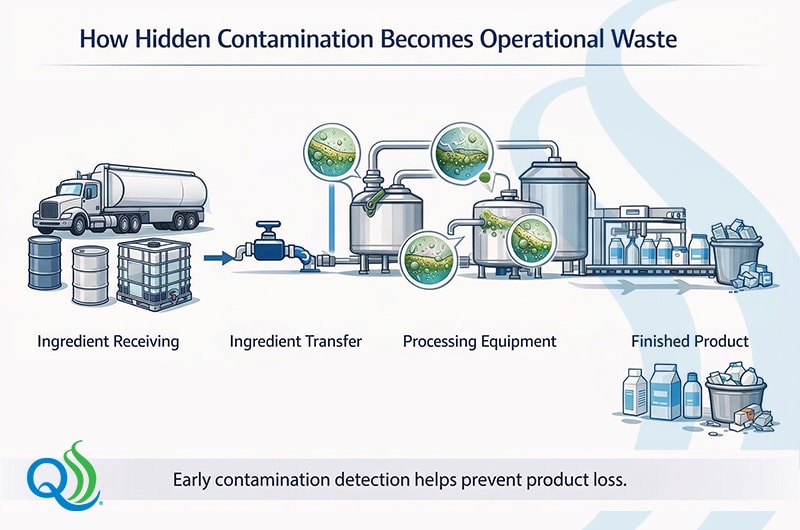
Food Manufacturing Waste Reduction: How Hidden Contamination Drives Product Loss
In food and beverage manufacturing, product waste usually starts long before it becomes visible. Often, by the time a batch is placed on hold, a shipment is rejected, or product keeping quality/shelf life drops, the problem has been developing inside the processing system for days or weeks. In Part One of this series, we looked at how persistent contamination…
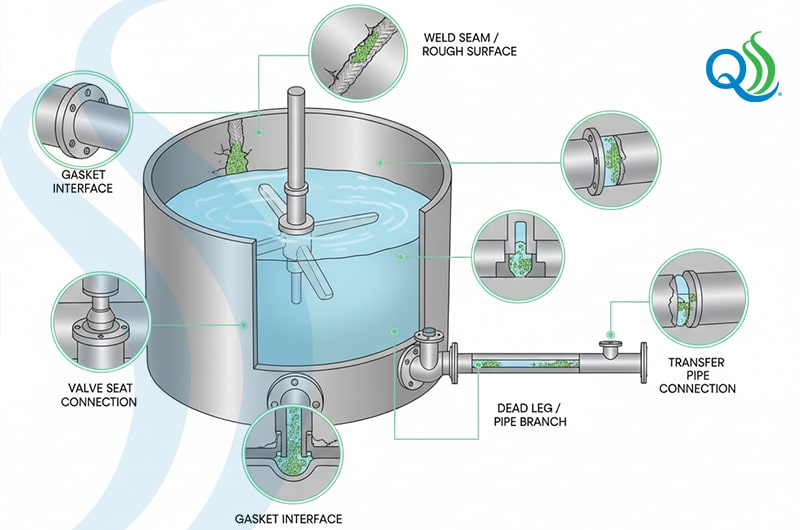
Extended Shelf Life in Food Processing Starts Inside Your Equipment
Extended shelf life in food processing is often achieved through raw material quality, formulation, packaging, and temperature controlled distribution. However, recurring shelf-life loss often stems from the production system. While many studies on production system related shelf-life loss focus on dairy plants, the causes of shelf-life loss and the resulting food waste apply broadly. One area…

Dairy Farm Water Quality: Understanding the Links Between Water Conditions and Downstream Contamination Risks
Water plays a key role on dairy farms, from keeping animals hydrated to cleaning equipment. When milk quality issues arise, water test results are often characterized as simply “good” or “bad.” In truth, the situation is more complicated. Dairy farm water quality, by itself, does not usually cause contamination. However, it establishes conditions that allow microorganisms…
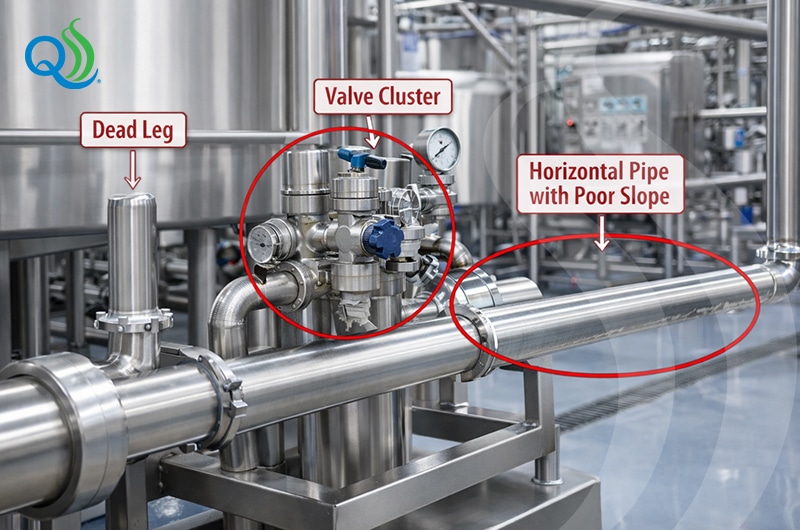
Dead Ends in Cheese Processing: Trapped Cheese Residues as a Driver of Defect Rates
In the complex environment of cheese processing, optimization often focuses on visible control points: pasteurization temperatures, pH targets, culture activity, and packaging sterility. Yet lurking within the physical infrastructure of the plant are literal dead end slow-flow or blind areas that allow residues to accumulate. These dead ends, like valve clusters, stagnant flow zones, blind…

The Math Behind the Microbial Menace: Dairy Product Sampling Strategies for Low-Level Contaminants
Key Takeaways This article is a deep, technical dive, but these key takeaways give you a quick overview of the most important concepts and conclusions on contamination, detection, and dairy product sampling strategies. Small Numbers, Big Consequences In dairy processing, persistent quality problems such as off-flavors, textural changes, and visible spoilage begin with imperceptibly small…
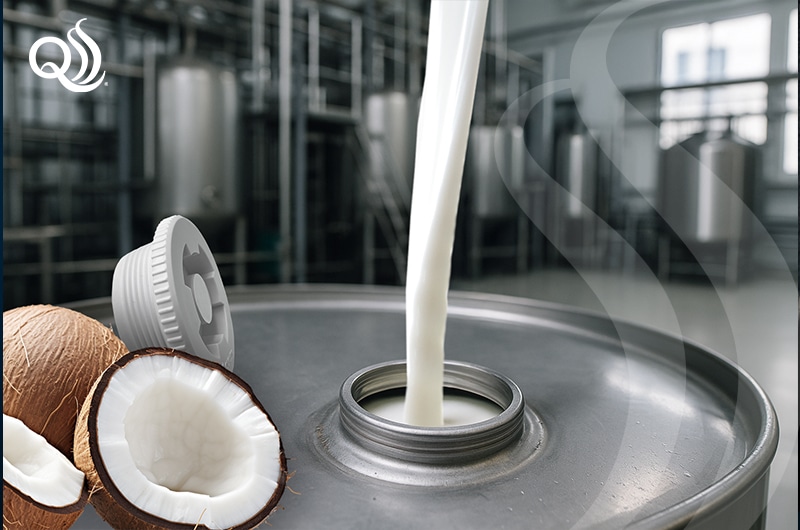
The Challenges of Coconut Milk Spoilage: What Manufacturers Need to Know
Coconut milk spoilage poses an ongoing challenge for manufacturers, even as coconut-based products gain popularity worldwide. For centuries, coconuts, coconut water, and coconut milk have been wholesome protein rich staples in many tropical countries, and coconut oil has been used in culinary and personal care routines for about as long. The significant health benefits, including anti-carcinogenic, anti-microbial,…