

Sterile or Aseptic: Understanding the Difference in Food Processing
Sterile or aseptic are terms often used interchangeably in dairy and liquid food processing, especially when discussing sampling equipment and collection procedures. However, they describe two different parts of contamination control. Sterile describes equipment or materials that are free from viable microorganisms, while aseptic describes the methods and practices used to prevent contamination during sampling or another procedure.
What Does Sterile Mean?

In general, sterile applies to equipment and environments. It means the absence of living microorganisms. It is the concept of having or using equipment that is totally germ-free.
Reaching sterility requires multiple controls. Equipment must be cleaned and sanitized using specialized procedures. It must be sterilized using validated techniques in which the ability to kill all living organisms has been tested and verified. Sterile items must also be packaged to maintain sterility during storage and shipping. Finally, they must be handled in ways that protect sterility during use.
In medicine, for example, sterile equipment and supplies are vital to prevent contamination and infection during surgery. Similarly, sterile needles are required so patients are not infected from inoculations or during a blood draw.
In dairy and food processing, the circumstances are different, but the concept is the same. When sampling and testing equipment comes into contact with product, it should be sterile to avoid introducing harmful bacteria or other microbes.
This attention to sterility plays a critical role in upholding the quality, shelf stability, and safety of dairy and other food products and is vital to ensure samples are not compromised by exogenous contamination.
What Is Aseptic?

Aseptic sounds similar to sterile, but there is an important difference. Sterile describes the condition of equipment or an environment. Aseptic describes the techniques used to keep sterile things sterile.
Aseptic techniques are designed to prevent the introduction or transfer of microorganisms. In a dairy or liquid food processing environment, aseptic sampling technique is critical to control contamination of either the collected samples or the food product being sampled. Aseptic techniques are required for inserting sterile sampling equipment into the production line and for collecting samples through sterile equipment.
If aseptic technique is not followed, the positive effect of sterile sampling equipment is lost, collected samples may be inaccurate or become contaminated, test results will be untrustworthy, and harmful organisms may be added to products being sampled.
Putting Aseptic Practices into Operation
In fluid processing environments, aseptic sampling helps protect the sample from outside contamination while maintaining a closed process. Learn how closed-system sampling can support more representative process data.
Aseptic Sampling Is Critical to Testing Accuracy
Many industries are vulnerable to microbial contaminants that can compromise quality and safety, including dairy, brewery, beverages and liquid foods, biofuels, enzyme manufacturing, and nutraceutical and functional foods. As such, the importance of proper sampling technique cannot be overemphasized.
Aseptic sampling through sterile sampling equipment is critical to ensure food safety, product quality, and informed decision-making. Here’s what the U.S. Food and Drug Administration (FDA) says about aseptic sampling:
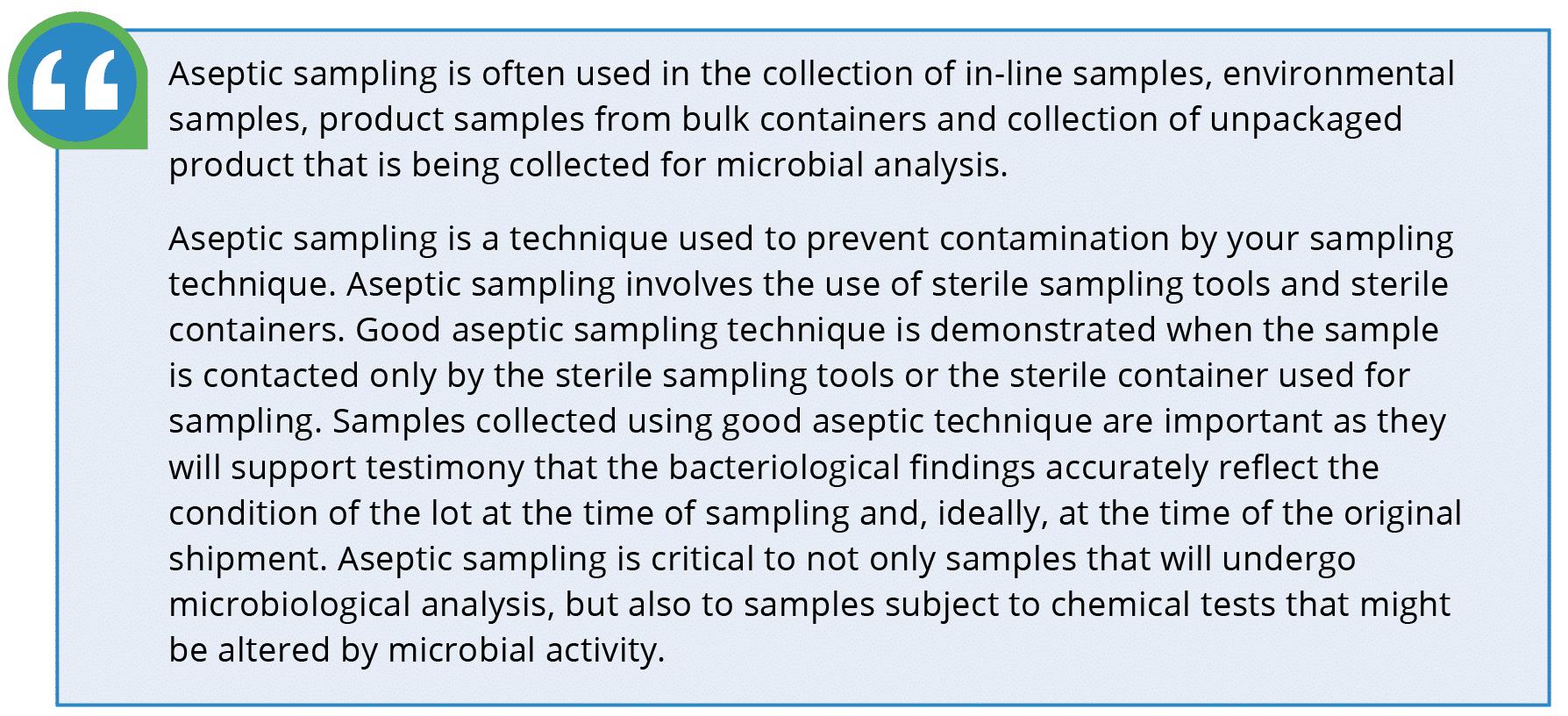
QualiTru® Sampling Systems has proudly manufactured sterile sampling equipment for the dairy, brewery, beverages and liquid foods, biofuels, enzyme manufacturing, and nutraceutical and functional foods industries for more than 40 years and we have developed aseptic sampling protocols that have been proven by decades of use. Our products and processes have been accepted by the FDA and meet the agency’s rigorous standards for aseptic sample collection. QualiTru’s standard operating procedures (SOPs) for aseptic sample collection techniques are available here.
Is It Sterile or Aseptic?
Both sterile equipment and aseptic techniques are important for protecting the integrity of samples collected for microbiological testing, as well as chemical testing, when results could be affected by microbial contamination. Without sterile equipment and appropriate aseptic sampling practices, samples may be exposed to outside contamination, potentially compromising the accuracy and reliability of test results.
QualiTru TruStream™ Septa, TruStream™ and TruMotion Collection Bags, and TruDraw® Sterile Single Use Samplers, are sterilized using verified and validated procedures. When these sterile components are used with appropriate aseptic sampling practices, they help protect sample integrity and support more reliable testing.
When a TruStream Septum is installed using the appropriate aseptic technique, samples can be collected without additional sterilization steps at the sampling point, such as steam sterilization. This supports faster sample collection and lower labor requirements while reducing employee exposure to live steam and steam-heated equipment.
Sterile vs. Aseptic at a Glance
The table below provides a quick comparison of how sterile and aseptic apply to food processing and sample collection.
| Term | What it describes | Food-processing example |
|---|---|---|
| Sterile | An object or material free from viable microorganisms | A pre-sterilized needle, septum, sampler, or collection bag |
| Aseptic | The practices used to prevent contamination during a procedure | Collecting a sample without exposing it to the surrounding environment |
| Why both matter | Sterile equipment and aseptic technique work together | They help protect sample integrity and support more reliable test results |
Sterile Equipment Supports Reliable Sample Collection
Reliable test results begin with a sample that accurately represents the product and has been protected from outside contamination. QualiTru’s sterile sampling components, combined with appropriate aseptic collection practices, help processors reduce contamination risk and collect samples with greater confidence.
Have questions about aseptic and representative sampling? Ask Our Experts